
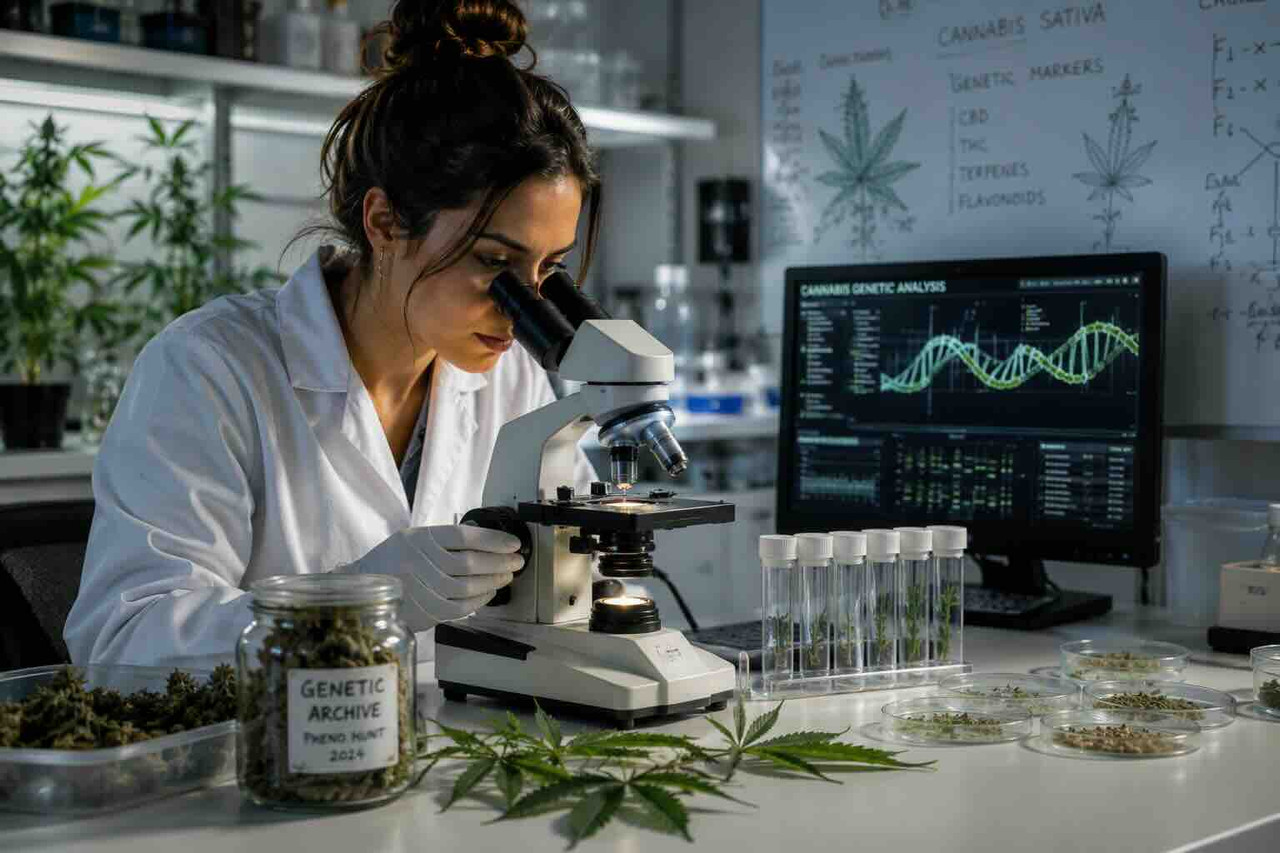
One of the biggest myths in cannabis cultivation is that large harvests require large grow rooms. After working with breeders, hobby growers, and commercial cultivators for many years, I can confidently say that productivity is far more dependent on efficiency than on square footage.
Some of the most impressive gardens I have seen were built inside compact tents, converted wardrobes, small cupboards, and limited indoor spaces where every centimeter had a specific purpose. Small-space cultivation requires a different mindset. Instead of thinking about plant numbers, successful growers focus on canopy management, environmental control, and genetic selection.
When these elements work together, a small cultivation area can produce results that surprise even experienced growers.
Choosing Genetics That Match the Space
The first decision is often the most important: selecting the right genetics.
Many growers underestimate how much plant structure influences cultivation success. A highly vigorous tropical sativa may triple in size after flowering begins, quickly overwhelming a compact grow tent. On the other hand, a balanced hybrid with moderate stretch is significantly easier to manage.
As a breeder, I always evaluate cultivars according to the environment where they will be grown. Compact internodal spacing, controlled vertical growth, and strong lateral branching are traits that work particularly well in limited spaces.
Autoflowering varieties can also be excellent options. Their compact size and short lifecycle make them attractive for growers who want quick harvests without extensive plant training. However, photoperiod genetics often provide greater flexibility because growers can extend vegetation and shape plants before flowering begins.
Canopy Management Is More Important Than Plant Count
Many beginners assume that adding more plants automatically increases yields. In reality, overcrowding often reduces efficiency.
Successful small-space cultivation focuses on maximizing the productive canopy rather than maximizing the number of containers. Every section of the canopy should receive adequate light and airflow.
This is where training techniques become valuable. Topping encourages multiple primary branches instead of a single dominant stem. Low-stress training helps distribute growth horizontally. Strategic pruning improves airflow and redirects energy toward productive flower sites.
In breeding rooms, we often evaluate cultivars according to how efficiently they fill available space. A plant with balanced branching frequently outperforms a taller plant that creates excessive shading.
The goal is simple: create a flat, even canopy where light is distributed as uniformly as possible.
Managing Climate in a Small Environment
Environmental control becomes increasingly important as cultivation space decreases. Small grow areas react quickly to changes in temperature and humidity.
A powerful light inside a small tent can raise temperatures rapidly. Likewise, dense flowering plants can elevate humidity levels enough to increase mold risk.
For this reason, ventilation should never be treated as an afterthought. A properly sized extraction system removes excess heat while maintaining fresh air exchange. Oscillating fans help prevent stagnant air pockets and strengthen plant structure.
Monitoring equipment is also worthwhile. A simple thermometer and hygrometer provide valuable information that allows growers to identify trends before problems develop.
Growers researching suitable genetics for compact environments often compare options through https://www.ministryofcannabis.com/it/. Selecting genetics that naturally fit the available space reduces the need for aggressive corrective measures later.
Lighting Efficiency and Equipment Choices
Modern LED technology has transformed small-space cultivation. Older lighting systems generated significant heat, limiting how close fixtures could be positioned to the canopy. Today’s LEDs are considerably more efficient and allow growers to maximize usable growing space.
However, fixture placement remains important. Excessive light intensity can stress plants, while insufficient coverage reduces productivity. The objective is even distribution rather than simply maximizing output.
Container selection also influences results. Oversized containers consume valuable floor space, while containers that are too small may restrict root development. Matching container volume to plant size improves overall efficiency.
When designing compact gardens, every component should contribute directly to productivity.
Common Mistakes in Small-Space Growing
The most common mistake is attempting to do too much. Too many plants, excessive training, overfeeding, and unnecessary equipment frequently complicate cultivation.
Another mistake is neglecting airflow. Dense canopies may look impressive, but without adequate circulation they create ideal conditions for pests and disease.
Overwatering is also particularly common in small gardens because environmental conditions often slow evaporation. Healthy roots require oxygen, and saturated media can significantly reduce plant performance.
Professional growers generally focus on stability rather than intensity. Consistent environmental conditions almost always outperform aggressive cultivation techniques.
Final Thoughts
Growing marijuana in small spaces is not about overcoming limitations. It is about using available resources intelligently.
Careful genetic selection, effective canopy management, proper environmental control, and efficient equipment choices can transform a compact area into a highly productive cultivation space.
Industry developments and cultivation trends can be followed through https://prohibitionpartners.com, but the principles that produce successful harvests remain remarkably consistent. Healthy plants, stable conditions, and thoughtful planning will always outperform complicated strategies.
In many cases, a well-managed small garden produces better results than a poorly managed large one. That is a lesson every experienced breeder eventually learns.