
Website AEO and GEO Checker is becoming an important tool in modern SEO workflows, especially as search engines shift toward semantic understanding and AI-driven results.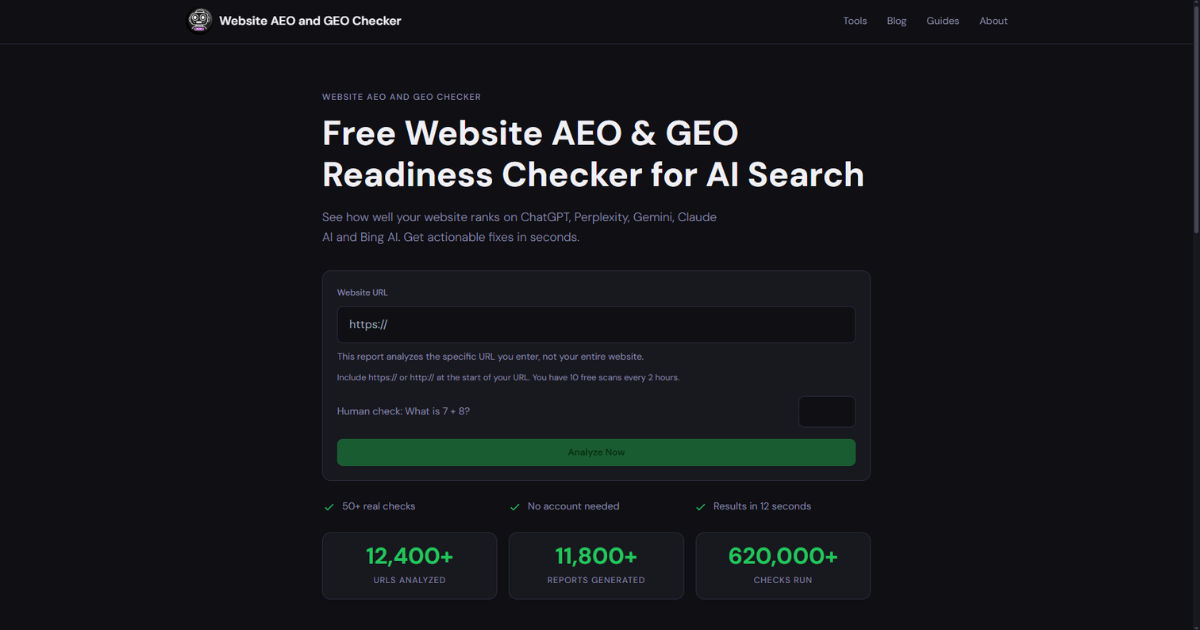
In this guide, we will explore in depth what website GEO semantic SEO is, how it works, why it matters, and how it helps websites improve visibility in search engines and AI-based discovery systems.
This article is written in a simple, easy-to-understand way so that even a 12th-grade student can fully grasp the concept and apply it in real-world SEO strategies using Website AEO and GEO Checker.
Introduction to Website GEO Semantic SEO
Website GEO semantic SEO is a modern search optimization approach that focuses on meaning, context, and user intent rather than just keywords. It combines traditional SEO with semantic understanding and geographic relevance (GEO signals).
In simple words, GEO semantic SEO helps search engines understand:
- What your website means
- Where your content is relevant
- What user questions it answers
- How topics connect with each other
The rise of AI search systems has made semantic SEO more important than ever. Tools like Website AEO and GEO Checker help analyze how well a website is optimized for both semantic meaning and geographic relevance.
Unlike old SEO methods that focus only on keywords, semantic SEO focuses on relationships between words, entities, and topics.
What is Semantic SEO?
Semantic SEO is the practice of optimizing content based on meaning and context instead of just exact-match keywords.
Key Idea of Semantic SEO
Search engines like Google now understand:
- Synonyms (same meaning words)
- Entities (people, places, things)
- Context of a sentence
- User search intent
For example:
If someone searches “best laptop for students,” search engines understand:
- Budget laptops
- Lightweight devices
- Battery life importance
- Student use cases
Even if the exact keyword is not repeated, content can still rank if it matches intent.
What is GEO in SEO?
GEO in SEO refers to geographic relevance of content. It helps search engines understand where a business, topic, or audience is located.
GEO SEO includes:
- Local search optimization
- City-based targeting
- Country-specific content
- Regional intent signals
For example:
A bakery in Lahore will rank better for “best bakery in Lahore” if GEO signals are strong.
Understanding Website GEO Semantic SEO
Website GEO semantic SEO is the combination of:
- Semantic SEO (meaning-based optimization)
- GEO SEO (location-based relevance)
Together, they help search engines understand:
- What your website is about
- Where it is relevant
- Who should see it
This makes your website more visible in both:
- Traditional search engines
- AI-powered search systems
Tools like Website AEO and GEO Checker are used to analyze how well these signals are implemented across a website.
Why Website GEO Semantic SEO is Important
Modern search engines no longer rely only on keywords. They use AI models that understand meaning.
Here’s why GEO semantic SEO matters:
1. Better Search Rankings
Websites with strong semantic structure are easier for search engines to interpret.
2. Improved Local Visibility
GEO signals help businesses appear in local search results.
3. AI Search Compatibility
AI search engines prefer structured, meaningful content.
4. Higher User Engagement
Content that matches intent keeps users on the page longer.
5. Future-Proof SEO
As AI search grows, semantic and GEO signals become more important.
How Website GEO Semantic SEO Works
Website GEO semantic SEO works through multiple layers of understanding.
1. Content Meaning Analysis
Search engines analyze:
- Topic relevance
- Sentence meaning
- Related concepts
2. Entity Recognition
Entities are real-world objects like:
- Cities
- Brands
- People
- Products
Example:
“Paris” is recognized as a location, not just a word.
3. Location Signals (GEO)
Search engines check:
- IP-based location
- Content location references
- Business listings
4. User Intent Mapping
Search engines identify what the user wants:
- Information
- Purchase
- Navigation
- Local services
5. Content Relationships
Pages are connected through internal linking and topic clusters.
Role of Website AEO and GEO Checker
Website AEO and GEO Checker is used to evaluate how well a website is optimized for:
- Semantic SEO structure
- GEO targeting signals
- Content relevance
- AI search readiness
It helps identify:
- Missing semantic keywords
- Weak GEO targeting
- Poor content structure
- Lack of entity optimization
This makes it easier to improve website performance in search engines.
Key Elements of GEO Semantic SEO
To fully understand this concept, we must look at its main components.
1. Topic Clusters
Instead of writing isolated pages, websites create topic clusters.
Example:
Main topic: Digital Marketing
Subtopics:
- SEO
- Content marketing
- Social media
- Email marketing
This improves semantic relationships.
2. Entity-Based Optimization
Entities are important in semantic SEO.
Search engines understand:
- “Apple” as a company or fruit depending on context
- “Jordan” as a country or a person
Using clear context helps ranking.
3. Geographic Content Signals
GEO signals include:
- City names
- Local references
- Regional language patterns
- Google Business Profile
4. Structured Data
Structured data helps search engines understand content better.
It includes:
- Schema markup
- Business details
- FAQs
- Reviews
5. User Intent Optimization
Content should match what users are trying to do:
- Learn something
- Buy something
- Find a service
- Compare options
How GEO Semantic SEO Differs from Traditional SEO
Traditional SEO focused on:
- Keyword density
- Backlinks
- Meta tags
But GEO semantic SEO focuses on:
1. Meaning Instead of Keywords
Search engines analyze context instead of repetition.
2. Location Relevance
Content is optimized for geographic targeting.
3. Topic Authority
Websites become authorities in specific subject areas.
4. AI Understanding
Content is structured for AI systems, not just search bots.
How Search Engines Use Semantic GEO Signals
Search engines use advanced AI systems to interpret GEO semantic SEO.
Step 1: Crawling Content
Bots scan all pages.
Step 2: Understanding Meaning
AI models interpret sentences.
Step 3: Mapping Entities
Names, places, and topics are identified.
Step 4: Location Matching
Content is linked to geographic regions.
Step 5: Ranking Results
Pages are ranked based on relevance and authority.
Benefits of Website GEO Semantic SEO
1. Higher Organic Traffic
Better understanding leads to better rankings.
2. Better Local Reach
Businesses attract nearby customers.
3. Improved Content Quality
Content becomes more structured and meaningful.
4. Stronger AI Search Presence
AI systems prefer semantically rich content.
5. Long-Term SEO Stability
Less dependency on keyword tricks.
Common GEO Semantic SEO Mistakes
1. Keyword Stuffing
Overusing keywords reduces quality.
2. Ignoring Location Signals
Missing GEO relevance hurts local rankings.
3. Weak Internal Linking
Poor structure confuses search engines.
4. Lack of Topic Focus
Mixing unrelated topics reduces authority.
5. No Entity Optimization
Not using clear references to real-world objects.
How to Optimize for Website GEO Semantic SEO
Step 1: Build Topic Clusters
Organize content into structured groups.
Step 2: Use Natural Language
Write like humans speak.
Step 3: Add Local Signals
Include city, region, or country references.
Step 4: Improve Internal Linking
Connect related pages logically.
Step 5: Use Structured Data
Help search engines understand your site.
Step 6: Analyze with Tools
Use Website AEO and GEO Checker for audits.
Future of GEO Semantic SEO
The future of SEO is heavily influenced by AI systems.
We can expect:
- More AI-driven search results
- Stronger importance of semantic meaning
- Increased GEO personalization
- Reduced focus on keywords
Websites that adopt GEO semantic SEO early will have a strong advantage.
Practical Example of GEO Semantic SEO
Let’s say you have a website about fitness.
Traditional SEO:
- “best gym workout”
- “gym exercises”
GEO Semantic SEO:
- “best gym workout for beginners in Lahore”
- “home fitness routine for students in Pakistan”
- “local gym training programs near me”
This shows:
- Meaning (fitness routines)
- GEO relevance (location)
- User intent (beginner, student, etc.)
Role of Content Structure in GEO Semantic SEO
Structure is extremely important.
Good structure includes:
- Clear headings
- Short paragraphs
- Logical flow
- Internal linking
- Topic grouping
Search engines prefer structured content because it is easier to interpret.
How AI Search Uses GEO Semantic SEO
AI systems analyze:
- Context of queries
- User location
- Search history
- Content meaning
Then they generate:
- Direct answers
- Local recommendations
- Summarized results
This is why GEO semantic SEO is critical today.
Best Practices Summary
To succeed in GEO semantic SEO:
- Focus on meaning, not repetition
- Use geographic relevance naturally
- Structure content clearly
- Optimize for user intent
- Use tools like Website AEO and GEO Checker
- Build topic authority
Conclusion
Website GEO semantic SEO is a powerful evolution of traditional SEO that focuses on meaning, context, and geographic relevance. Instead of simply targeting keywords, it helps search engines understand what your content truly represents and who it is meant for.
As AI continues to shape the future of search, GEO semantic SEO will become the foundation of online visibility. Websites that adopt this approach early will rank higher, attract better traffic, and build stronger authority in their niche.
By using structured content, entity optimization, and GEO signals, you can create a website that performs well not only in search engines but also in AI-driven platforms.
Tools like Website AEO and GEO Checker play an important role in identifying gaps and improving overall optimization strategies, making them essential for modern SEO success.